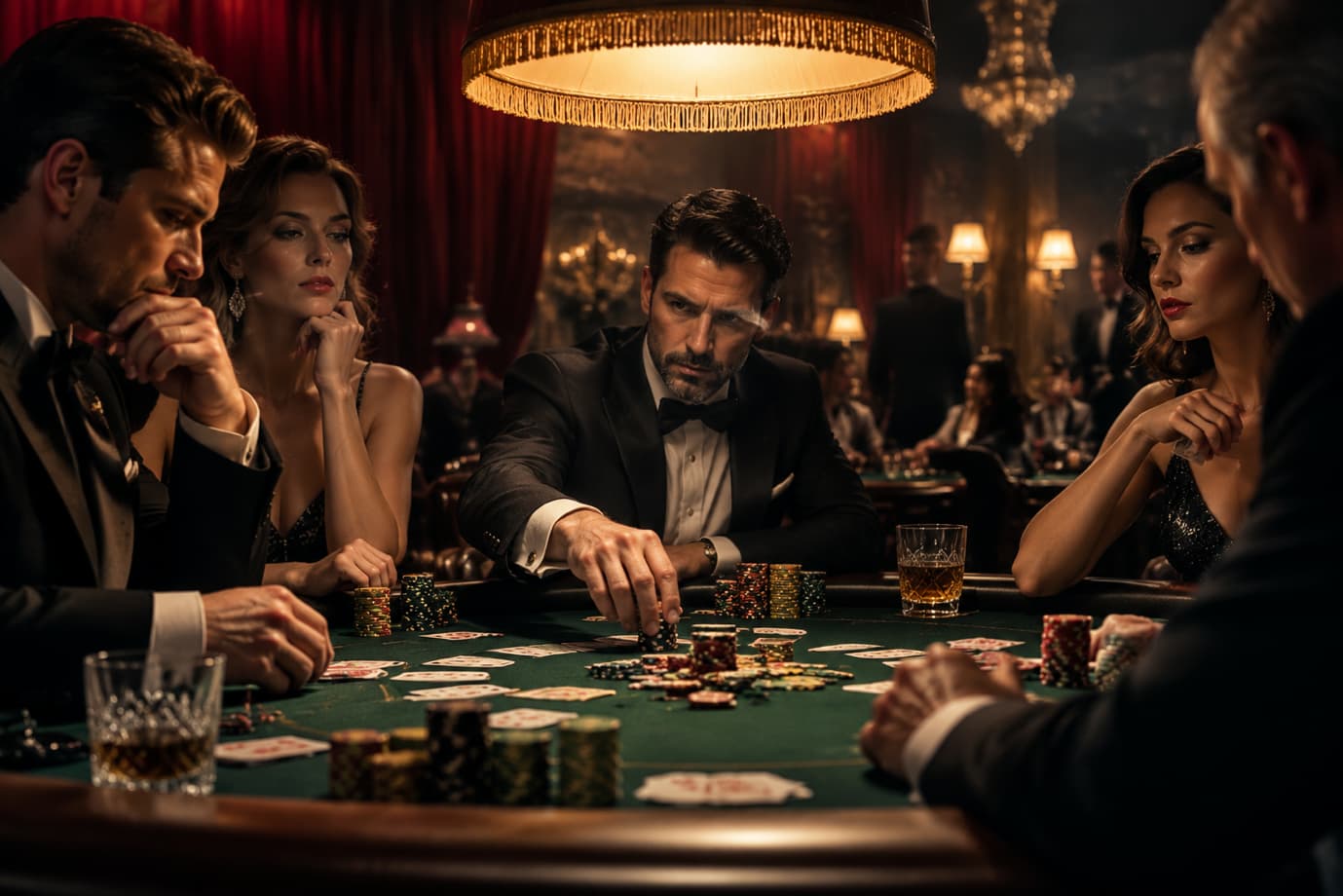
Dramatic Tension and the Staging of Classic Casino Scenes
There is no place like a table with money on it to do so much work on a playwright. A roll of the dice or a game of cards provides stakes, rules familiar to the audience and a clock that runs between deal and showdown, without a line of exposition. No wonder some of the most hot-blooded scenes in the repertoire, whether of Pushkin in Petersburg or Tennessee Williams in New Orleans, are constructed on a bet.
That vocabulary has travelled well beyond the stage. Anyone who opens the official website for players in Australia (AU) reaches Knightslots Australia, where completing registration to sign in or login at the Knightslots casino (Knight slots online casino) opens a lobby arranged like a dressed set, with the featured game placed right where the eye lands first. Once a player completes sign in at the Knight slots online casino, the AU lobby opens on a bank of titles arranged like a dressed set, with the featured game placed where the eye lands first.
Why the Gaming Table Is a Natural Stage
A game is a play in miniature. It has a start in the deal, a middle in the betting and an end in the reveal and each player desires something that the other is attempting to deny. Much structure is seldom ready-made with dramatists.
The issue of focus is also addressed in the table. A ring of chairs draws the eye to the centre of the stage as a proscenium draws it to the frame, allowing a director to allow the rest of the set to go dark and rely on the audience to observe hands and faces. Status is also on display, as who bets, who folds and who bankrolls the game tells more about the characters than any speech would tell.
Blocking, Lighting and the Timing of the Reveal
The practical challenge is that a real game is played facing inwards. Directors resolve it by raking the table towards the house, placing the key player three-quarters off the audience so that the reactions across the table can be read, or by breaking the circle so that one character paces and the rest sit.
The rest is done by lighting. There is one practical lamp, low over the baize, which throws a pool of light which isolates the game, and when a character leaves the pool the audience is aware that the scene has shifted register. This is what Williams requested in Streetcar and designers have imitated it since then.
Then there is the reveal, where a scene lives or dies. The cards are virtually never visible to the audience, and thus the hand turned is played on the faces looking at it, and the actual choice made by the director is how long to maintain the silence before the winner responds. Keep it too short and the stakes are blown away; keep it too long and the house begins to laugh.
Three Scenes That Set the Standard
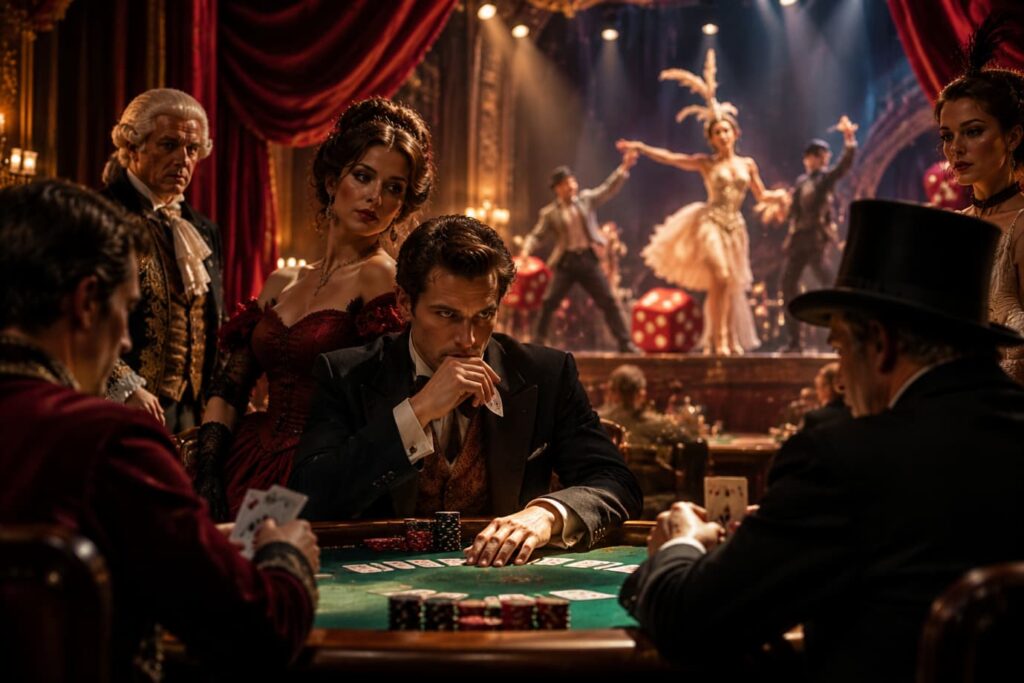
Three works of various traditions demonstrate the versatility of the device: an opera, a straight play and a Broadway musical, all of which resolve the staging problem in their own manner.
The opera by Tchaikovsky, based on the story by Pushkin, culminates in a gambling house where Herman bets all his money on the three cards that a ghost has promised him. The two first win, the room goes quiet and the third card, which is supposed to be an ace, happens to be the Queen of spades.
The staging issue in this case is the crowd. A complete chorus of gamblers must remain alive and responsive without ever taking the attention of a single man and a single card, and the most powerful productions paralyze the entire room at the moment of the turn.
Tennessee Williams built the most studied example around a kitchen table. The poker night in A Streetcar Named Desire was striking enough that Thomas Hart Benton was commissioned to paint it in 1947, the year the play reached Broadway, and the finished canvas now sits in the collection of the Whitney Museum of American Art. The cards themselves barely matter; the tension comes from Stanley’s rising temper and from the two women moving in and out of his light.
The stage direction by Williams requires the uncooked colours of a Van Gogh billiard hall at night, the men in solid blues, a purple and a light green under a bulb with a green glass shade. Blanche and Stella remain on the fringes of that light, behind the portieres, and the contrast reveals who is at the table well before Stanley loses his temper.
The musical by Frank Loesser transfers the game to a sewer and transforms it into a set piece with a ballet in the middle. Sky Masterson bets a thousand dollars on the soul of each gambler, or rather their presence at a mission meeting, and the roll that ensues determines the plot.
In this case the revelation is staged instead of spontaneous. The dancers move up and down with the dice, thus the audience experiences the roll before they know the outcome, which is the opposite of the poker trick and equally effective.
From Proscenium to Screen
All this remained in the theatre. The low lamp and the silence held were borrowed by film almost simultaneously, television game shows have constructed whole formats around the timed reveal, and the digital gaming lobby is the most recent heir.
The Lyrabet casino treats its official website in Australia (AU) as a proscenium arch, leading straight to Lyrabet online where registration allows players to login and sign in to the Lyrabet online casino lobby, revealing a catalog lit from the center outward like a second-act scene after the bell.
What Directors Still Take from the Table
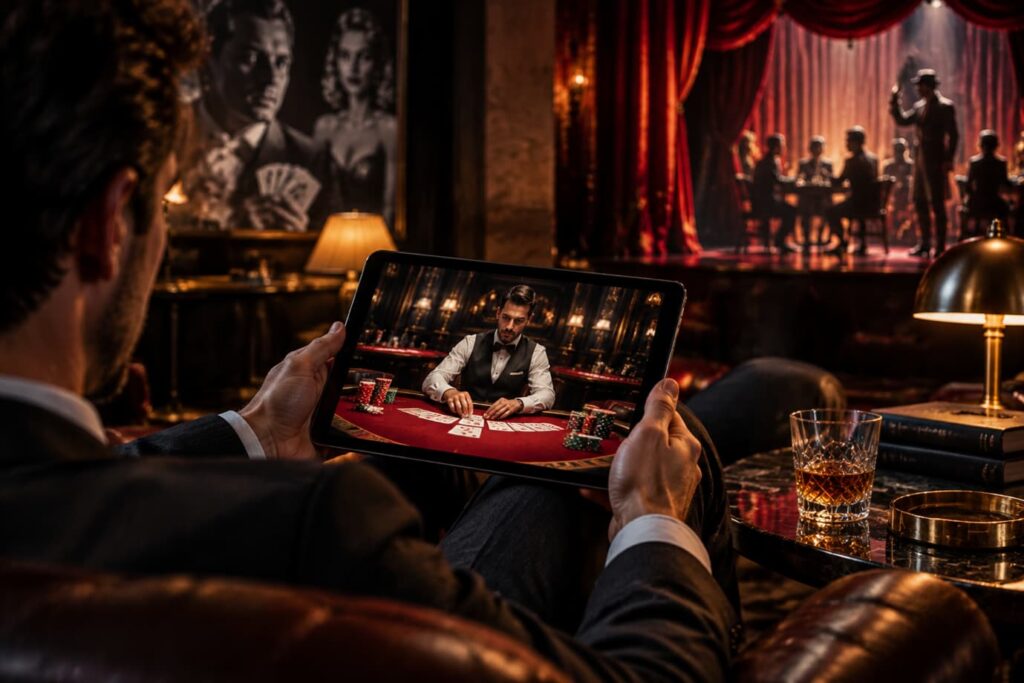
The lesson is two-way. Any confrontation, with or without a card in sight, can be borrowed by a director, and the discipline of the table, a fixed circle of attention, a visible hierarchy of who acts and who waits, a reveal that is not merely given but timed.
The gaming world survives as it brings the invisible to light. Desire, fear and readiness to take a chance are difficult to demonstrate on a stage, but a beat was too long in a hand, or a pile of chips thrust forward, demonstrates all three simultaneously. This is why the table is reappearing, in a Petersburg gambling house, and on the screen in the pocket of a player.